
Counter-fire radars and air defence pods show where UK defence money is landing after the Budget
SRC UK's £74m radar deal and a Thales air defence award show post-Budget MoD money tracking Ukraine's lessons, and where smaller suppliers can find a way in.
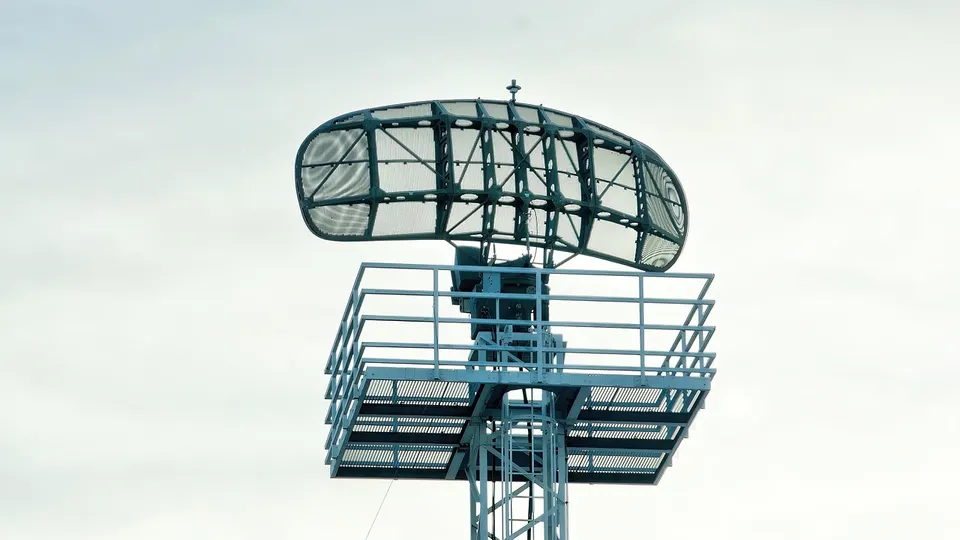
The first defence contracts to appear since the Budget are not for ships, jets or armoured vehicles. They are for equipment that finds enemy guns and trains soldiers to shoot down drones and aircraft at short range. That says more about where the Ministry of Defence is spending in the near term than anything in the Budget speech.
The biggest award is a £74m contract for SRC UK to supply Gryphon R1430 close find radars to 5th Regiment Royal Artillery. It comes under SERPENS, the British Army’s weapon-locating programme. SRC’s own release is dated 28 October, which was Budget day. The deal was reported in trade coverage on 20 November and carries an initial term of six years. The day before, Defence Equipment and Support (DE&S) gave Thales UK a contract worth £3,495,013 for Improved Laser Telemetry and Monitoring Facility pods, which are used in short-range air defence training.
Neither sum is large next to the defence budget. Both still matter. They show the MoD placing firm orders in the areas where the war in Ukraine has hurt armies most: finding artillery and mortars, and defending against threats at low altitude. For suppliers, and especially smaller British firms, those are the areas worth watching over the next twelve months.
What SRC UK is delivering
SRC UK is the British arm of SRC, Inc., a US defence electronics group. Under the contract, the Gryphon R1430 radars will be combined with an acoustic system so that the regiment can detect mortars, artillery and other short-range threats. They will be supplied in vehicle-mounted and dismounted versions. SRC says the contract will pay for an expansion of its hardware facility in Lincolnshire and create new jobs there over the six-year initial term.
The acoustic half of that pairing already exists. In February, Leonardo UK won an £18.3m SERPENS contract for its SONUS system. SONUS locates enemy mortars and artillery passively, by listening rather than transmitting, and is going to the same regiment. According to a June industry account, the programme reached Minimum Deployment Capability roughly eleven weeks after that award. That is fast by MoD standards.
The pairing reflects how artillery duels have gone in Ukraine. A radar has to transmit to find targets, so the enemy can detect and target it in return. A passive acoustic network gives nothing away and can cue the radar only when it is needed. Buying both, and putting them together, is the British Army acting on that lesson rather than writing about it.
SERPENS is much bigger than these two contracts. When DE&S began the assessment phase, it described SERPENS as a Category A project worth more than £400m with an expected 30-year life. It targeted initial operating capability in 2029 and full operating capability by 2032. The close find competition itself was launched in 2025 with plans to buy 25 radars on a staged schedule finishing during 2027. The same report said the contract was expected to start on 29 May 2026. If that is right, the award came about five months late, which is a reminder that urgency in speeches does not always survive the approvals process.
Thales and the air defence pipeline
The Thales award is small, but it sits inside a much larger air defence programme. The ILTMF pods support training for short-range air defence crews. That matters more now that the Army is preparing to replace Stormer, its current mounted short-range air defence system. In March, Thales UK signed an assessment phase contract for that replacement, known as MSHORAD. At the time, the MoD aimed to replace Stormer before the end of 2028 with a system that meets current battlefield requirements.
Air defence also runs through Britain’s support for Ukraine. In the week of the Thales award, the government announced more than 1,000 short-range air defence missiles and 1,000 long-range strike drones for Kyiv. Ministers also told Parliament that the £1.6bn contract placed with Thales on Ukraine’s behalf, for more than 5,000 lightweight multirole missiles, should create 200 new jobs. Thales’s Belfast missile work therefore serves the British Army and Ukraine at the same time. That gives the company a production base few rivals in the UK can match.
Why the timing matters
These awards arrive at an unusual point in the funding cycle. The Defence Investment Plan was published on 30 June with a funding gap. On 28 October, Chancellor John Healey told MPs he had secured the £4.7bn needed to complete funding for the plan. The bigger question, how and when Britain reaches 3% of GDP, was pushed to next year’s Spending Review, which is expected to set 2030 as the target date.
That leaves a window that suppliers should read carefully. Programmes already in the investment plan now have money behind them and can go to contract. New starts, and any growth beyond the plan, have to wait for the Spending Review. The early awards are therefore going to programmes that were already well along, approved and small enough to sign quickly, such as SERPENS and SHORAD training. Prime contractors with existing positions on those programmes are the obvious winners for now. Bidders hoping for a new competition in 2027 will have to wait.
The Budget also added a financing route that matters as much to smaller firms as the contracts do. The National Wealth Fund and the British Business Bank will provide up to £5bn of investment and lending for defence, dual-use technology and sovereign industry over four years. A defence finance taskforce will prepare for the Spending Review. For an SME that needs to build production capacity before an order arrives, that matters more than any single contract.
Who benefits
The pattern so far is clear. Foreign-owned firms with established UK subsidiaries are winning the sensor and missile work: SRC UK, Leonardo UK and Thales UK. Each has a factory and workforce in Britain, and each can point to equipment already proven in service. In weapon locating, Leonardo’s family of acoustic systems has been used in Ukraine, and SRC’s Gryphon radars are already in use in the United States. The MoD is clearly preferring kit that already exists, assembled or supported in Britain, over development from scratch. The speed of the SONUS deployment shows why.
The losers, for now, are firms offering new designs that still need years of development, and suppliers waiting for programmes that the investment plan left unfunded or delayed. The Spending Review is where that changes, or does not.
What SMEs need to do to win this work
The government has set a firm target for small business spending. The MoD’s SME action plan commits to raising SME spend by £2.5bn by summer 2028 on top of a £5bn baseline. Direct SME spend is targeted at £1.48bn in 2026/27, rising to £2bn in 2027/28. Indirect spend through supply chains is targeted at £4.5bn and then £5.5bn. Most of the money will still reach smaller firms through prime contractors rather than direct from the MoD.
That has three practical consequences for SMEs.
First, the SERPENS and SHORAD awards create supply chain work. A six-year radar programme that needs an expanded hardware facility will need machined parts, cable harnesses, enclosures, power systems, vehicle integration and through-life support. The most realistic route in is through SRC UK, Leonardo UK and Thales UK, rather than waiting for a direct MoD tender. SMEs should be talking to these companies’ supply chain teams now, while production lines are being planned.
Second, the MoD has built a front door that did not exist a year ago. The Defence Office for Small Business Growth, launched in January, is meant to simplify procurement and improve cash flow for subcontractors working under large prime contracts. It is introducing an SME Commercial Pathway alongside that work. Firms that have not engaged with it are missing the main route the MoD has created for them. The plan also commits to publishing direct SME spend each year, so suppliers will be able to judge whether the target is being met.
Third, smaller contracts such as the £3.5m ILTMF award show the kind of direct work SMEs can realistically win: training equipment, test kit, support services and parts. They are below the threshold where only the largest primes can compete. Searching Find a Tender regularly for DE&S notices in weapon locating, air defence and counter-drone work is basic, and many smaller firms still do not do it consistently.
There are limits. Security clearances, accreditation and the cost of bidding still favour incumbents. And spending targets are not the same as spending achieved. The 2026/27 direct target of £1.48bn would need to be met within a budget that was only just closed in the Budget.
What to watch next
Over the coming months, look first at whether the rest of the SERPENS suite reaches contract. With the acoustic and close find elements placed, attention turns to the longer-range radar segments and to integration. Second, look at whether the MSHORAD assessment phase leads to a production decision quickly enough to meet the 2028 Stormer replacement target. Third, watch the Spending Review next year, which will decide whether the current focus on counter-battery work, air defence and drones grows or stalls.
For now, the message from the contract notices is clearer than the one from the Treasury. Near-term British defence money is going to the capabilities that Ukraine has shown matter most, mainly through companies that already have UK factories. Smaller firms that want a share should focus on those supply chains first.
Sources
- SRC UK Awarded £74M SERPENS Contract from UK MOD, SRC, Inc., 2026-10-28
- The Week in Defence: Air Defence, Drones and a Seat at the Table, 14 to 20 Nov 2026, Think Defence, 2026-11-21
- Budget closes defence funding gap but tough decisions on real increases put off until next year, Navy Lookout, 2026-10-28
- Budget 2026: No Date for 3% of GDP on Defence Yet, Calibre Defence, 2026-09-08
- SERPENS prior information notice, Sell2Wales, 2023-09-03
- Leonardo SONUS Selected for British Army, Joint Forces News, 2026-02-14
- Leonardo SONUS for the Royal Artillery passive weapon finding sensor requirement, Future Warfare Magazine, 2026-02-27
- SERPENS reaches Minimum Deployment Capability in 11 weeks, Integrated Synergy Consulting, 2026-06-04
- Thales UK signs UK MOD contract for MSHORAD development, Unmanned Airspace, 2026-03-15
- Ministry of Defence's Small and Medium-sized Enterprise (SME) action plan, GOV.UK, Ministry of Defence, 2026-07-21
- Defence Office for Small Business Growth launched, Defence Online, 2026-01-28
More in Defence & Security
- Healey's first Budget faces a £4.7bn test on the defence plan he quit over
Wednesday's Budget must confirm £4.7bn of unfunded Defence Investment Plan money. Industry wants proof the £298bn plan holds up before it commits capital.
- Europe's €150bn SAFE defence loans are paying out, and Britain is on the outside
Nine EU states have drawn about €11.9bn of SAFE pre-financing. Poland is buying at home, Canada is inside the scheme, and UK content is capped at 35%.


Related reading
Genesis AI's $500m robot round lands in the worst week for chip stocks
Genesis AI raised $500m at a $3.5bn valuation as chip stocks crashed. Why investors pay for robot hands, and what it signals for European founders.

Qatar and Brookfield's €15bn German pact shows who now funds Europe's build-out
QIA and Brookfield have signed a €15bn memorandum to invest in German industry and defence. The pact shows where Europe's real asset capital now comes from.

Houthi strikes on Saudi oil test a market that had stopped pricing Gulf risk
Houthi claims against Saudi refining and ports landed just as traders stripped risk out of Brent. Asian buyers restocking reserves are not betting on calm.