
Genesis AI's $500m robot round lands in the worst week for chip stocks
Genesis AI raised $500m at a $3.5bn valuation as chip stocks crashed. Why investors pay for robot hands, and what it signals for European founders.
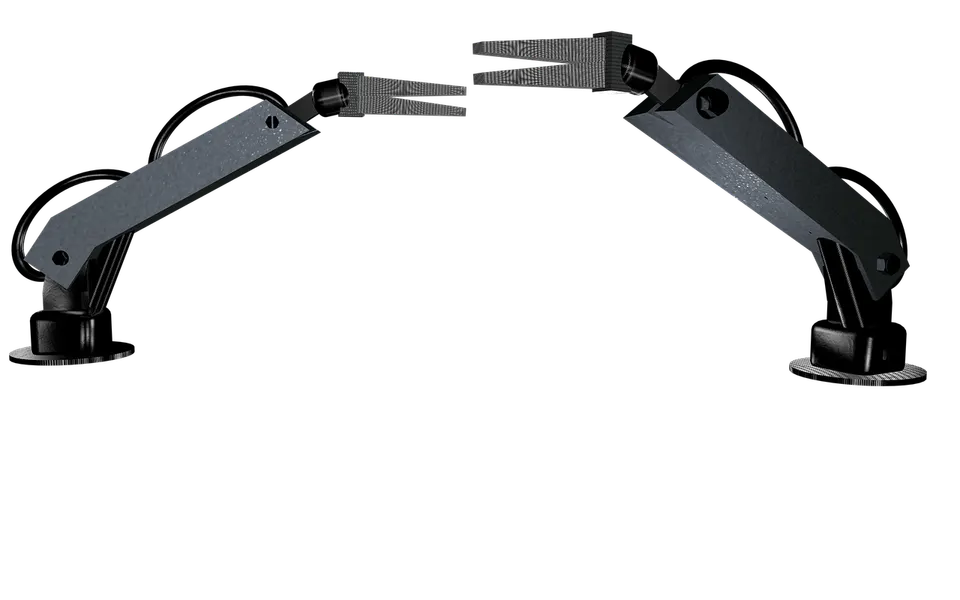
Genesis AI, a robotics company with bases in Paris and San Carlos, California, announced on 17 November that it had raised a $500m Series A at a post-money valuation of $3.5bn. Premji Invest, Khosla Ventures and Eclipse co-led the round. Nvidia, AMD Ventures, Samsung Next, T. Rowe Price Associates, Durable Capital Partners, Bpifrance, Zoom and Ericsson also took part. The money will pay for wider deployment of Eno, the company’s general-purpose robot.
The timing is what makes the deal stand out. In the same week, public investors sold the companies whose chips run physical AI. The Nasdaq 100 dropped 10.4 per cent over the week to Friday 20 November. That was its worst week since the Covid crash, and it left the index in bear market territory. Nvidia, one of Genesis’s new shareholders, lost 14 per cent on the Friday alone after reports that the SEC was reviewing its accounting. Private money paid a premium for robot hands while public money sold the semiconductors behind them. For founders, the question is whether that gap holds into 2027.
What Genesis actually raised, and on what
The numbers show an unusually fast step-up. Genesis raised a $105m seed in July 2025, co-led by Eclipse and Khosla. Bloomberg reported in July this year that talks valued the company at about $3bn before new money. A $500m raise at $3.5bn post-money works out at roughly that $3bn pre-money figure, so the price was largely set months before the market fell. Disclosed funding now totals $605m, and the company employs close to 100 people.
The company is young even by AI standards. Chief executive Zhou Xian began Genesis as a multi-university simulation project during his Carnegie Mellon PhD in 2022. The company formally launched in March 2025, when he teamed up with co-founder Théophile Gervet. Gervet is a former Mistral AI researcher, and Genesis makes its own actuators, motors, gearboxes and hands while building its AI models in-house.
According to the company, the new capital goes to four things: larger-scale data collection and training, better physical manipulation, customer deployments of Eno and hiring of AI researchers and robotics engineers. Reuters reported other backers including Eric Schmidt, Xavier Niel and Bpifrance. Genesis is trialling Eno with a small number of customers, including through a manufacturing and logistics partnership with South Korea’s LG CNS, and expects a customer rollout in 2027.
The bet is on hands, not humanoid looks
Eno does not try to look like a person. It is a dual-arm robot on a wheeled base, and Genesis has stated plainly that physical capability matters more than appearance. The investment case rests on dexterity. In the company’s argument, a robot that is 99 per cent accurate at each step has only about an 82 per cent chance of completing a 20-step task without error. It also says dexterous manipulation makes up more than 80 per cent of physical work.
Data collection is the second part of the pitch. Most robotics companies pay operators to control robots remotely and record what they do. Genesis instead learns physical skills from workers wearing sensor gloves and transfers those skills to Eno. If this works at scale, it gives the company a cheaper and faster supply of training data, which is the scarcest input in robotics. Investors are paying for a possible data moat, not only for hardware.
That explains why the strategic investors joined. Nvidia, AMD and Samsung sell compute and memory. A general-purpose robot that learns from large volumes of human demonstration data will need a lot of both, in training and in deployment. For a chipmaker, a stake in Genesis is a stake in future demand for its own products. That logic does not change because the chipmaker’s share price fell by a fifth in a week.
Why private and public money moved in opposite directions
The public sell-off was severe. Chip stocks had their worst week since the one after the 9/11 attacks, and Nvidia, Micron, Marvell, CoreWeave and Nebius each lost more than 20 per cent. According to Bespoke, tech companies that beat earnings forecasts this season fell an average of 1.5 per cent on results day. That was the worst reaction to good news since at least 2001. Public investors had stopped rewarding AI revenue growth.
There are three reasons the private market did not move with it, and only one of them is reassuring.
The reassuring one is that physical AI is a different bet. Chip valuations depend on how long hyperscaler data centre spending lasts. Genesis’s valuation depends on whether a robot can do useful factory work reliably, which is an earlier and separate question. A drop in Nvidia’s share price says little about whether gloves can teach a machine to pack boxes.
The second reason is timing. Private rounds take months to agree, and this one’s price appears to have been set in the summer. A deal that closes in a falling market does not show that investors agree with the price in that market.
The third is concentration. Venture money in 2026 has gone to a small number of very large rounds. In Europe, AI took a record 75 per cent of Q3 venture funding, about $18.8bn, while seed funding was flat year on year and Mistral’s $3.5bn round alone was 14 per cent of the quarter. Large funds that need to deploy capital keep writing large cheques to a few names, whatever happens on the Nasdaq. That supports the leading companies. It does not lift the rest of the market.
The limits investors are pricing in
The round does not prove that Eno works at commercial scale, and the company’s own disclosures show how early it is. Genesis has built 30 to 40 Eno units and is running pilots with a few customers it has not named. Reporting since the announcement found that Eno’s hands last only a few weeks of regular work, and that a demonstration shown to TechCrunch did not use the robot itself. The company’s showcase tasks, from lab pipetting to wire harnessing, have run on a test robot rather than Eno. It has not published independently verified reliability data from long customer deployments.
A replacement cycle measured in weeks matters for any factory buyer that is comparing a robot with a human shift or a fixed automation cell. At $3.5bn, Genesis is valued on the assumption that it solves this. If it does not, the 2027 rollout will expose it.
Where it sits among Europe’s robotics rounds
Measured against Europe, the round is far larger than anything else at Series A. In June, Barcelona’s THEKER announced an $85m Series A that it described as Europe’s largest robotics Series A. In July, London-based Humanoid raised $152m at a $1.35bn post-money valuation. It called this the largest Series A for a European humanoid-first company. Genesis’s round is more than three times Humanoid’s.
The record claim needs two qualifications. First, it is not a global record. Texas-based Apptronik extended its Series A in February, taking the total above $935m at a $5.5bn valuation. Second, Genesis is only partly European. Its chief executive has said the company is prioritising the US, with a US supply chain and American contract manufacturers, before expanding in Europe. Its lead investors are American and Indian funds. French institutions such as Bpifrance took part, but they did not lead.
What it means for European founders raising in 2027
There is a clear reading of the round for founders. The European angle helped Genesis with talent, with Bpifrance support and with a Paris base. The valuation, though, came from US-style ambition: in-house hardware, its own foundation model, a proprietary data pipeline and a US market strategy. European robotics founders who pitch a narrower, Europe-first business should not expect Genesis multiples.
Our position is that this round is closer to a high-water mark than a sign that the market is fully open. The price was largely agreed before the crash. The public market has just shown it will punish AI companies even when they deliver results. And Europe’s own data shows money concentrating at the top while seed funding stays flat. Investors heading into 2027 are likely to keep backing two or three physical AI companies per category and ask everyone else for hard deployment numbers. That means units shipped, uptime, how long components last and cost per task.
The window is still open for companies with proprietary data and a working product in front of paying customers. It is narrower for those relying on the theme alone.
What to watch next
Over the coming months, watch for three signals. The first is whether Genesis names the US contract manufacturer behind its planned mass production next year and publishes reliability data from the LG CNS pilots. The second is whether other robotics rounds now in negotiation close at prices agreed before November or are repriced. The third is whether the chip sell-off spreads into private AI valuations when funds mark their portfolios at the end of the year. If Genesis’s 2027 deployments show durable hands and repeatable tasks, the round will look early rather than expensive. If they do not, it will become the main example of the 2026 robotics peak.
Sources
- Nvidia-backed Genesis AI raised $500 million for its humanoid robot at a $3.5 billion valuation, Quartz, 2026-11-18
- French robotics startup Genesis AI raised $500 million at $3.5 billion valuation, Quartz, 2026-11-21
- Nvidia-backed Genesis AI raises $500M Series A at $3.5B valuation to build general-purpose robots, Tech Funding News, 2026-11-18
- Genesis AI raises $500M at a $3.5B valuation to put its humanoid, Eno, to work, Autonomous Future, 2026-11-18
- Genesis AI Raises $500M At $3.5B Valuation To Bring Its Robots To Factories And Warehouses, Crunchbase News, 2026-11-17
- Genesis AI Raises $500M Series A: Glove-Trained Robot Hands Last Only Weeks, Tech Times, 2026-11-18
- $500M investment could bring AI robots to your workplace, Fox News, 2026-11-21
- Wall Street Sells AI, VCs Buy Robots, The Investor Society, 2026-11-18
- Genesis AI Raises $500M at $3.5B Valuation for Factory Robots, Inside AI News, 2026-11-17
- US technology stocks suffer their worst weekly loss since the pandemic as AI doubts pile up, The Decoder, 2026-11-21
- Chips suffer worst week since 2001 as the Nasdaq nears a bear market, Yahoo Finance, 2026-11-21
- Largest robotics Series A ever raised in Europe: How THEKER pulled CRV, Samsung, and LVMH to Barcelona with $85M, Tech Funding News, 2026-06-17
- Humanoid Raises $152 Million at $1.35 Billion Post-Money Valuation, Humanoid, 2026-07-21
- Top Humanoid Robotics Startups Funded in 2026, AI Funding Tracker, 2026-05-20
- Europe Q3 2026 startup funding hits $25B, up 77%, ValueAdd VC, 2026-10-09
More in Startups & Growth
- Record UK venture funds, thin seed slice: what founders face before the Budget
UK VC managers raised a record $6.9bn in Q3 2026, yet early-stage startups got just $740m. Why the cash is pooling late and what Wednesday's Budget may change.
- Companies House ID checks: the November cut-off founders cannot ignore
Companies House's ID verification transition ends in mid-November. Half of in-scope roles had complied by June, and founders' real deadlines may come sooner.

Related reading

Qatar and Brookfield's €15bn German pact shows who now funds Europe's build-out
QIA and Brookfield have signed a €15bn memorandum to invest in German industry and defence. The pact shows where Europe's real asset capital now comes from.

Houthi strikes on Saudi oil test a market that had stopped pricing Gulf risk
Houthi claims against Saudi refining and ports landed just as traders stripped risk out of Brent. Asian buyers restocking reserves are not betting on calm.

Amex's $350m penalty puts trade-based laundering controls on trial
A $350m US penalty on American Express over $13bn of missed trade laundering signals that regulators now test whether AML controls work, not just exist.